Recently, Southeast Asian countries have generally experienced weather with high temperatures above 40 degrees, making the world pay attention to the impact of the El Niño phenomenon. The impact on crop production in particular is at the heart of global commodity investors.
In summary, the main manifestation of El Niño phenomenon is heavy rain in South America, hot and dry Southeast Asia, which is beneficial to crop production in the main producing regions of South America, but will negatively affect other crops. grown in the main production regions of Southeast Asia.
And rubber is one of the important economic crops in Southeast Asia, plus prolonged low prices, if this year's El Nino really has a big impact on Southeast Asia, will rubber boom? The market has been waiting for a long time. What about the big bull market, this is of particular interest to rubber investors.
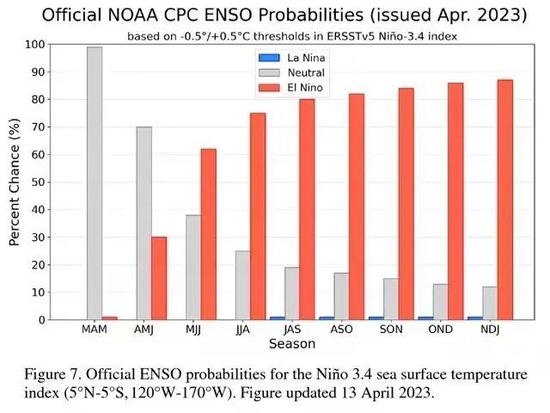
In April of this year, the National Oceanic and Atmospheric Administration (NOAA) issued an El Niño warning, as NOAA reports, the probability of an El Niño event has increased to 62% since May. until July this year and the chance of El Niño developing this fall is more than 80%. !
Judging from the current weather developments in Southeast Asia, the probability that NOAA's prediction will come true is very high. To put it bluntly, starting this summer, the problem of drought in Southeast Asia will begin to emerge, severe drought will have a great impact on rubber production, because 60-70% of the latex of rubber trees is water, and drought will lead to a decrease in latex production.
In other words, during the peak period of rubber production in Southeast Asia this year, the El Nino phenomenon may be disturbed causing a significant reduction in rubber production, which poses a potential risk of fluctuation requiring closely watched.


