Natural rubber prices in the world have increased to the highest level in nearly three years. Along with that, domestic rubber prices are recovering, promising to create momentum for domestic export businesses to prosper in the new year.
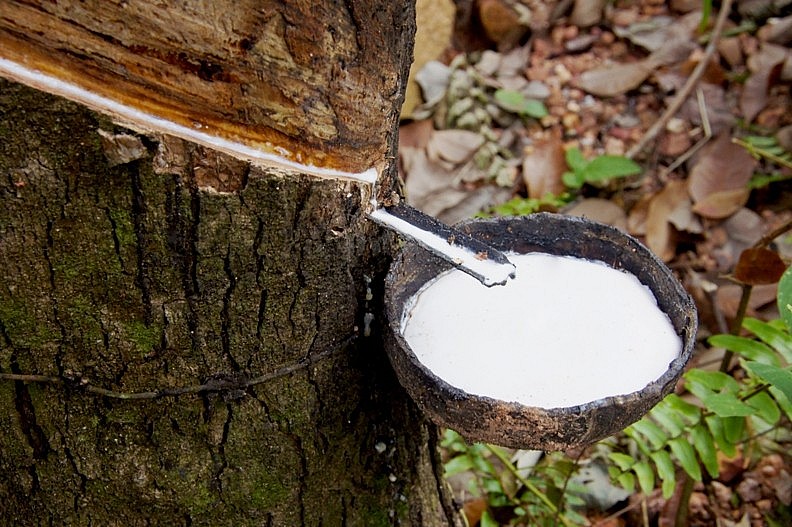
World rubber prices hit their highest level in nearly three years.
Booming auto sales pushed natural rubber prices up
During the trading session on February 1, natural rubber in futures contracts was traded at a price of 283.60 yen (1.93 USD)/kg on the Osaka Exchange, an increase of 11% compared to the previous session. the end of 2023. Previously, rubber prices reached 289.50 yen/kg on January 25, the highest level since February 2021.
The driving force behind this upturn is booming auto sales in China. In the first half of last year, new car sales hovered around 2 million units a month, according to the China Association of Automobile Manufacturers (CAAM). But in November 2023, sales increased 27.4% over the same period last year to 2.97 million units, and continued to increase 23.5% to 3.15 million units the following month. In particular, sales of new energy vehicles, including electric vehicles, exceeded 1 million units for the first time in November last year.
Increased auto sales have pushed up the demand for natural rubber. In December 2023, demand for tires for new cars in China increased by 30% compared to the same period in 2022, according to tire manufacturing company Michelin.
Besides the push from the demand side, the natural rubber market is also boosted when supply is tightening. Heavy rain in December 2023 in Thailand, the world's leading natural rubber producer, affected the crop. In Southeast Asia, the period from November to January is usually the season when rubber trees produce high yields.
Mr. Gu Jiong, head of corporate services and investment at Yutaka Trusty Securities, said that because of the impact of extreme weather this year, rubber farmers in Thailand were unable to increase. enough output during this peak season. On February 1, rubber futures prices in Thailand were at their highest level in the past 19 months at 73.07 baht (2.06 USD)/kg.
The crop failure situation in Thailand has tightened supply reserves in Japan. As of January 20, Osaka Exchange warehouses had 6,240 tons of natural rubber, much lower than the usual level at that time of year of about 10,000 tons.
Rubber prices are not expected to decrease until the low output season in Southeast Asia, lasting from February to April, ends. Meanwhile, according to CAAM, China's auto sales are forecast to increase to about 31 million units this year.
Create momentum for businesses to accelerate
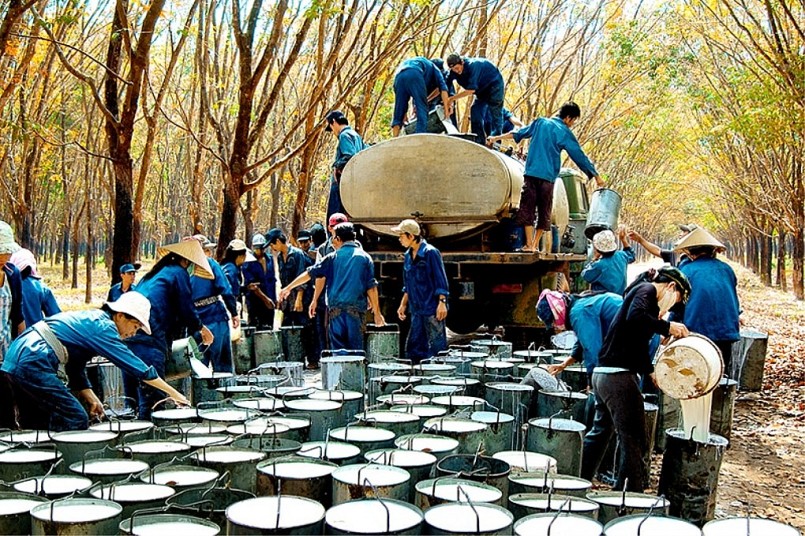
From the beginning of January 2024 until now, the price of raw rubber latex in many provinces and cities across the country is stable compared to the end of 2023.
At rubber companies, the current purchasing price of raw rubber latex remains around 270-305 VND/TSC. In particular, Phu Rieng Rubber Company kept the purchasing price at 285-305 VND/TSC, stable compared to the end of last month. Binh Long Rubber Company keeps the purchasing price at 285-295 VND/TSC. Ba Ria Rubber Company kept the purchasing price at 283-293 VND/TSC. Mang Yang Rubber Company kept the purchasing price at 270-278 VND/TSC, stable compared to the end of last month.
According to statistics from the General Department of Vietnam Customs, in 2023, Vietnam will export 2.14 million tons of rubber, worth 2.89 billion USD, down 0.1% in volume and down 12.8%. in value compared to 2022.
Regarding export prices, in 2023, export rubber prices will decrease sharply compared to 2022, reaching an average of 1,350 USD/ton, down 12.7% compared to the average export price in 2022.
The recovery of rubber prices significantly supports production and business activities of businesses in the industry.
It is forecasted that in the next quarter, the rubber industry will gradually improve due to the recovery of demand from major markets, especially the Chinese market, helping rubber prices increase in the context of oil prices likely to stay at a high level. .
Given the current clear price and demand advantages, Vietnamese rubber exporters need to have a strategy to boost exports, especially to the Chinese market in the near future. Along with that, businesses should proactively increase the proportion of processed rubber rather than raw rubber to increase export value. Rubber exports from now until the end of the year are expected to improve in both quantity and value.


